By Zhangjiajie Private Guide Editorial Team · Updated
Key facts
Last verified:
- Passport
- Carry the original every day
- Power
- 220 V, 50 Hz; type A and I sockets
- Payments
- Mobile payment is almost universal
- Foreign cards in wallets
- Visa, Mastercard and others link to Alipay and Weixin Pay
- Mountains vs city
- Mountain areas are cooler than published city temperatures
- Glass bridge
- Only a phone and small bag allowed; no high heels
What should I pack for Zhangjiajie in any season?
In every season, pack for mountain weather rather than city weather. The temperatures you see in forecasts are for downtown Zhangjiajie, and the viewpoints sit far higher. Published temperatures are for the downtown area (~300 m); mountain scenic areas are cooler, with higher snowfall chance and snow more likely to settle. Rain, mist and wind can arrive quickly on the plateau, and you will spend hours on stone steps and boardwalks.
The year-round core list:
- Walking or light hiking shoes with deep tread, already broken in
- Waterproof breathable jacket with a hood
- Quick-drying pants (jeans stay wet for hours)
- A warm mid-layer: fleece or light sweater
- Small daypack, 15–25 liters
- Refillable water bottle
- Sun hat, sunglasses and sunscreen
- Spare socks in a plastic bag
- Dry bag or zip bags for phone and passport
What documents and money should I carry?
Carry your original passport every day, because you will need it constantly. Carry your passport: hotels, real-name tickets, trains and police spot-checks all require it. If it is lost or stolen, report it at the nearest police station / Public Security Bureau. In Zhangjiajie this matters more than most places: the forest park, Tianmen Mountain and the Grand Canyon all use real-name tickets, and the name on the booking must match your passport exactly.
- Original passport (plus a photo of it on your phone and a paper copy in your luggage)
- Visa or proof of visa-free eligibility, and your onward ticket
- Hotel bookings and addresses written in Chinese
- Alipay and/or WeChat Pay set up with a foreign card before you travel
- A bank card with the Visa, Mastercard or UnionPay logo as backup
- Some cash in small notes
- Travel insurance details, including medical cover
For payments, remember one thing: Cashless payment through smartphone apps such as WeChat or Alipay is almost universal. Foreign cards can be linked to both apps. Cash is legal tender and must be accepted, but small vendors may lack change, so carry small notes. Our guide to Alipay and WeChat Pay explains setup step by step.
What electronics do I need?
Bring a plug adapter and check your chargers. 220 V, 50 Hz. Most sockets take type A (two flat pins) and type I (angled flat pins, as in Australia); the two-pin socket also accepts round-pin type C plugs.
- Plug adapter for type A and type I sockets
- Phone charger and cable (check it says 100–240 V)
- Power bank (real-name ticket QR codes, maps and payment apps drain batteries)
- Camera with spare battery; cold weather drains batteries faster
- Offline maps and a translation app downloaded before you arrive
- A data plan or eSIM sorted in advance
Some foreign apps and sites are blocked in China. Chinese authorities control internet access. Google, Facebook, YouTube and X are permanently blocked, and other sites (commonly reported to include WhatsApp, Instagram, Gmail and Google Maps) may also be inaccessible. Read our internet, VPN and eSIM guide before you leave home.
What should I pack for each season?
Add these to the core list for the month you travel. Each month’s weather page has specific temperatures.
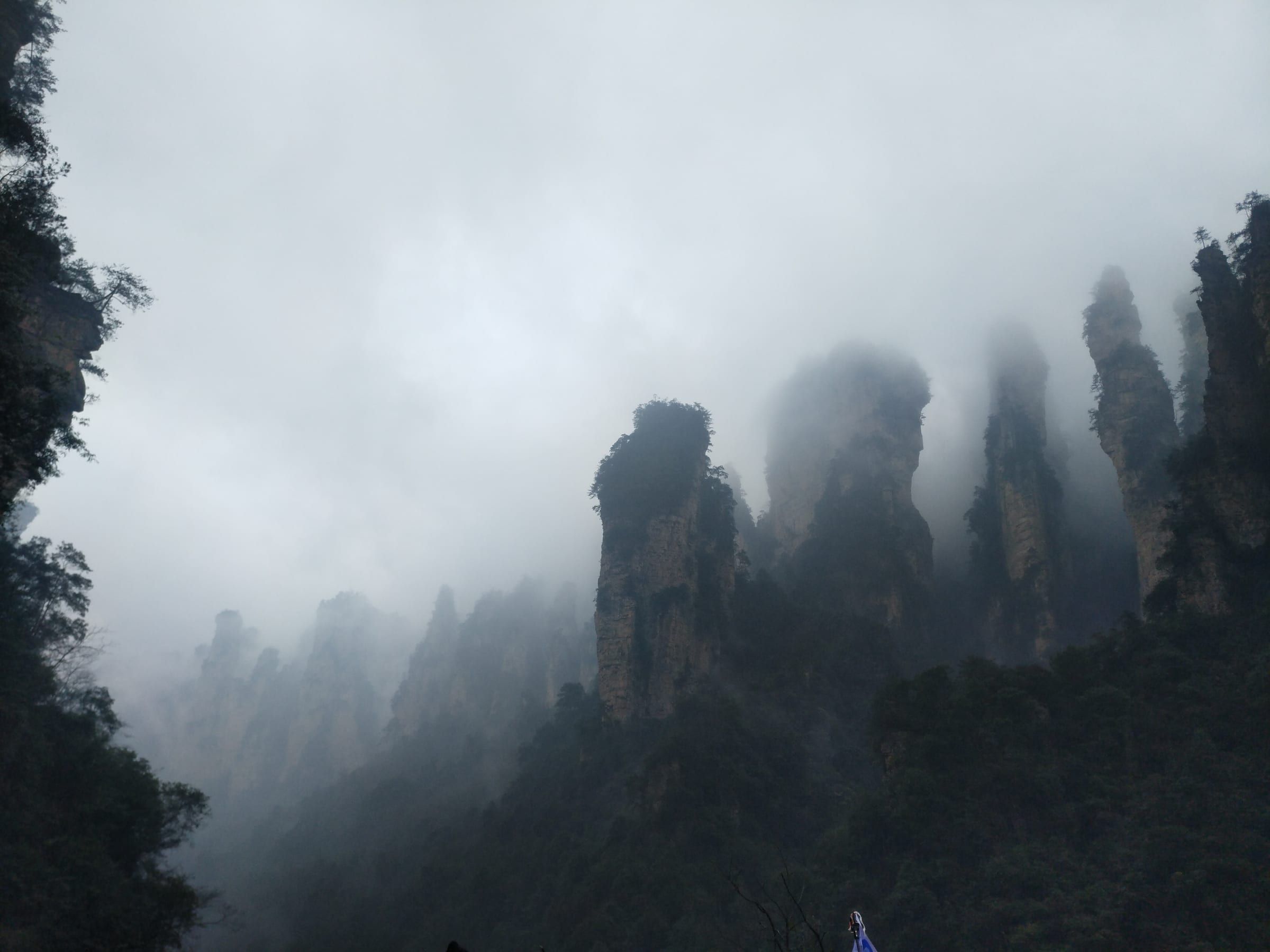
Spring (March to May)
- Reliable rain jacket; rain falls on about half the days
- Light fleece for mornings and summits
- Quick-drying shirts, one long-sleeve
- A second pair of shoes in case one gets soaked
- Insect repellent from May
Summer (June to August)
- Light, loose, breathable clothes
- Wide-brimmed sun hat and high-SPF sunscreen
- Rain jacket or poncho for storms
- Electrolyte sachets for hot stair days
- A thin long-sleeve layer for air-conditioned cars and the cooler Tianmen summit
- Insect repellent
Autumn (September to November)
- T-shirts and long-sleeve tops for layering
- Warm fleece or light down jacket, essential by late October
- Compact waterproof jacket
- Light gloves for sunrise starts in November
Winter (December to February)
- Insulated jacket (down or synthetic)
- Thermal base layers, top and bottom
- Warm hat, gloves and scarf; thin touchscreen gloves for photos
- Waterproof shoes with deep tread for icy steps
- Wool socks
- Lip balm and moisturizer for cold, dry wind
What should go in my day bag?
Keep the day bag light; you carry it up and down steps all day.
- Passport and phone in a zipped, waterproof pocket
- Water and snacks, zipped inside the bag (macaques on Golden Whip Stream grab food and plastic bags)
- Rain jacket and warm layer
- Power bank and cable
- Tissues and hand sanitizer; carry your own paper
- Small towel
- Any personal medicines
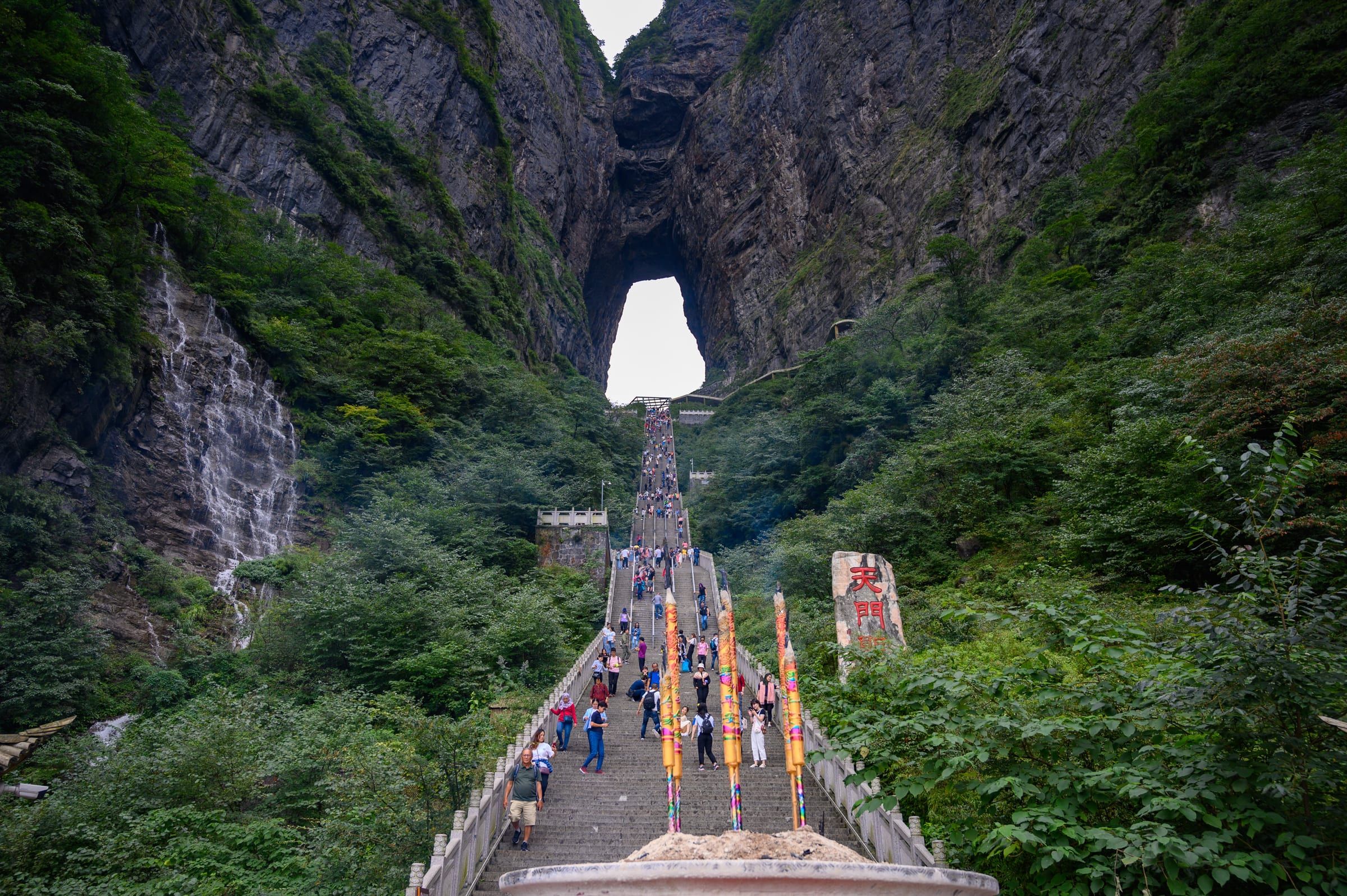
On the Zhangjiajie Grand Canyon glass bridge, only a phone and a small bag are allowed, and high heels are banned. Paid left luggage is available for anything bigger. The bridge also closes in fog, strong wind and thunderstorms. At Tianmen Mountain, the glass skywalks require shoe covers, sold for CNY 5 (≈ USD 1).
What should families and older travelers add?
A few extras make the trip easier for children and seniors:
- Every traveler’s original passport, including children (free tickets are still real-name)
- A baby carrier for under-threes; strollers only suit the flat trails
- Extra snacks, wet wipes and a change of clothes for children
- Enough personal medicine for the whole trip, in original packaging, with prescriptions
- A walking pole if you use one at home
- Emergency numbers saved in your phone: 120 ambulance, 110 police, 119 fire
See our guides to Zhangjiajie with kids and Zhangjiajie for seniors.
Local packing tips
- Choose grip over waterproofing if you must pick. Wet, mossy stone is the real hazard on the step routes, and deep tread helps more than a waterproof membrane.
- Keep your passport dry and reachable. You scan it at the gate, and sometimes again at re-entry. A zip bag inside an outer pocket saves digging through your pack in the rain.
- Pack the warm layer even when town is warm. The Tianmen summit is several degrees cooler than downtown, and plateau viewpoints are windy.
- Leave the big suitcase at the hotel. A private car and driver means you can keep spare layers in the car rather than carrying them.
- Bring specialist gear from home. Good walking shoes, a breathable rain jacket and your usual medicines are hard to replace at short notice in a small mountain town, so pack them rather than plan to buy them.
Ready to plan?
Want help timing your trip around the weather? Look at the 3-day classic tour, the hiking tour or the family and senior-friendly tour, read the best time to visit, or send us an inquiry.
Frequently asked questions
What shoes should I wear in Zhangjiajie?
Do I need a plug adapter in China?
Should I bring cash to Zhangjiajie?
Do I need my passport inside the park?
Is an umbrella or a rain jacket better?
What should I not bring?
Sources
- UK Foreign Travel Advice — China safety and security (accessed October 14, 2026)
- Government of China (gov.cn) — payment services for foreign visitors (accessed October 14, 2026)
- Travel China Guide — electricity in China (accessed October 14, 2026)
- Travel China Guide — Zhangjiajie Glass Bridge (accessed October 14, 2026)